

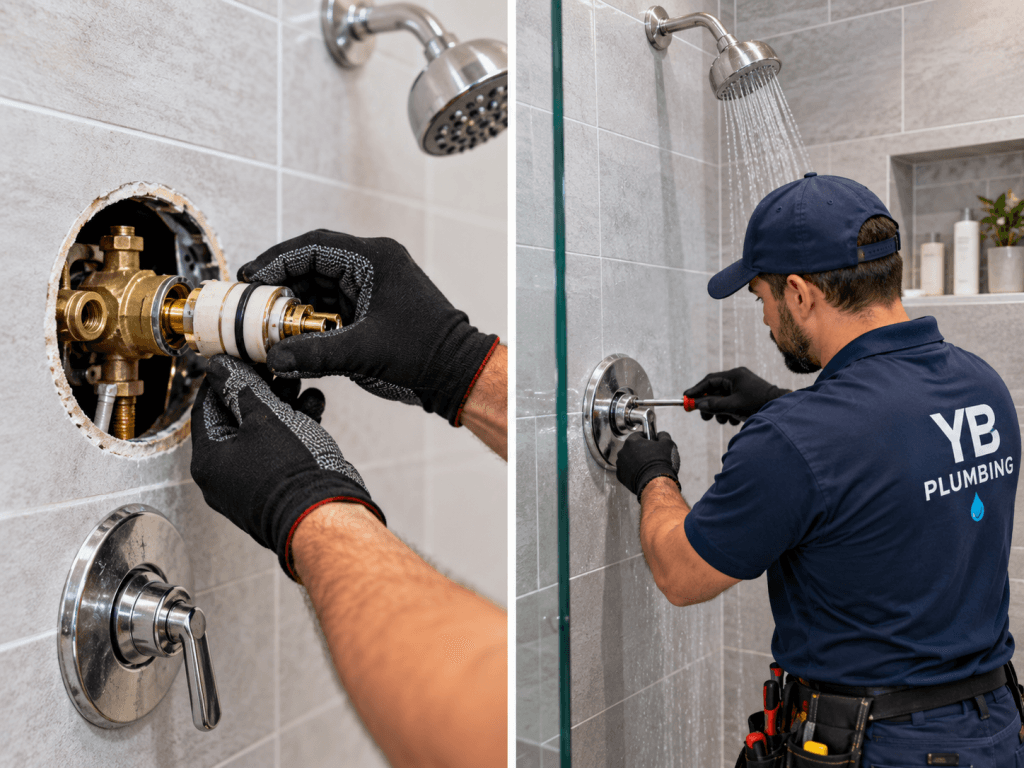
If your shower suddenly turns hotter, colder, or loses pressure when someone flushes a toilet, starts the washing machine, or opens another faucet, the problem is usually related to how water pressure is being shared through the home’s plumbing system. In many cases, the shower valve is supposed to compensate for those changes. When it cannot react properly, the temperature at the shower can shift quickly.
This does not always mean the water heater is failing. The cause may be a worn pressure-balancing cartridge, a restrictive valve, a partially closed shutoff, or a broader pressure problem in the home.
Why Another Fixture Can Change Shower Temperature
A shower mixes hot and cold water at the valve. If another fixture suddenly uses a large amount of cold or hot water, the pressure on one side of that mix can drop. An older or worn shower valve may not balance the change fast enough.
For example, flushing a toilet can temporarily increase cold-water demand. If the shower valve does not compensate correctly, the shower may become hotter until the system stabilizes again.
What a Pressure-Balancing Shower Valve Does
Many modern shower valves include a pressure-balancing cartridge or internal mechanism that responds when hot or cold pressure changes. Its job is to reduce the opposite side enough to keep the shower temperature more stable.
When the cartridge becomes worn, scaled, stuck, or damaged, the valve may react slowly or unevenly. That can cause sudden temperature swings even though the water heater is operating normally.
Signs the Shower Valve May Be the Problem
- The shower gets noticeably hotter when a toilet is flushed.
- The temperature changes when the washing machine or dishwasher fills.
- The shower handle has become stiff or difficult to adjust.
- Water temperature changes even though the handle stays in the same position.
- The shower pressure has gradually become weaker.
- The problem affects one shower more than other fixtures in the home.
If only one shower reacts while other showers remain stable, the valve or cartridge serving that shower is a likely place to inspect first.
When the Problem May Be House Water Pressure
If several fixtures throughout the home lose pressure at the same time, the issue may be larger than one shower valve. A restricted main valve, failing pressure regulator, undersized piping, mineral buildup, or another supply problem can reduce available flow when multiple fixtures are used together.
The pattern matters. One affected shower points more toward a local valve problem. Several affected fixtures point more toward the home’s water distribution system.
Can a Water Heater Cause Temperature Swings?
Yes, but the symptoms are usually different. A water heater problem may cause hot water to run out too quickly, stay lukewarm, or change temperature at multiple fixtures even when no other water is being used.
If the shower only changes temperature when another fixture turns on, the mixing valve and pressure conditions are usually more important to check first.
For related water-heater issues, see our Water Heater Repair page.
Why the Shower Cartridge Can Wear Out
Shower cartridges contain seals and moving parts that control flow and temperature. Over time, mineral deposits, normal wear, debris, and repeated movement can make the cartridge harder to operate or less responsive to pressure changes.
A worn cartridge may also cause dripping, weak flow, or difficulty finding a consistent temperature setting.
Can the Cartridge Be Replaced Without Opening the Wall?
Often, yes. If the valve body inside the wall is still in good condition, the cartridge can usually be serviced through the existing handle and trim opening.
That allows the failed internal component to be replaced without removing tile or opening a larger section of the wall. If the valve body itself is cracked, corroded, or leaking, a larger repair may be required.
For service information, visit our Shower Valve Repair page.
Why Weak Shower Pressure Can Be Related
A cartridge that is partially blocked by scale or debris can restrict both hot and cold flow. The shower may still work, but pressure can feel weak and temperature changes may become more noticeable when another fixture is used.
A clogged showerhead can also reduce flow, but it will not usually explain a sudden temperature swing caused by another fixture. Both the showerhead and valve should be considered when diagnosing weak flow.
What a Plumber Checks
A plumber can compare hot and cold flow, test how the shower reacts when other fixtures are used, inspect the cartridge, and check the valve body for visible damage or corrosion.
If the issue appears to affect the whole house, the next step may include checking water pressure, shutoff valves, supply piping, and the pressure regulator if the home has one.
Why Sudden Temperature Changes Should Be Corrected
A shower that suddenly becomes very hot can be uncomfortable and may create a scalding risk. Repeated temperature swings should be corrected rather than accepted as normal plumbing behavior.
If the problem is new, getting worse, or limited to one shower, a worn cartridge or balancing mechanism is worth checking.
Get the Cause Identified Before Replacing Parts at Random
Temperature changes can come from the shower valve, water pressure, supply piping, or water heater. Testing the system while the problem is happening is the fastest way to narrow down the cause.
YB Plumbing & Hydro Jetting Services Houston provides shower valve repair and residential plumbing service throughout Houston & Surrounding Areas. Contact us if your shower changes temperature when another fixture is used.