Some sewer failures can be repaired with less open excavation than a traditional dig, depending on the pipe condition, route, and access. YB Plumbing & Hydro Jetting Services Houston evaluates the damaged sewer first to determine whether a trenchless approach is suitable for the project.
Trenchless sewer repair refers to methods that restore or replace a damaged sewer while limiting the amount of open trenching across the property. Suitability depends on the type of defect, pipe material, collapse level, alignment, available access, and connection points. We inspect the line and site before recommending whether a trenchless or conventional repair makes more sense.
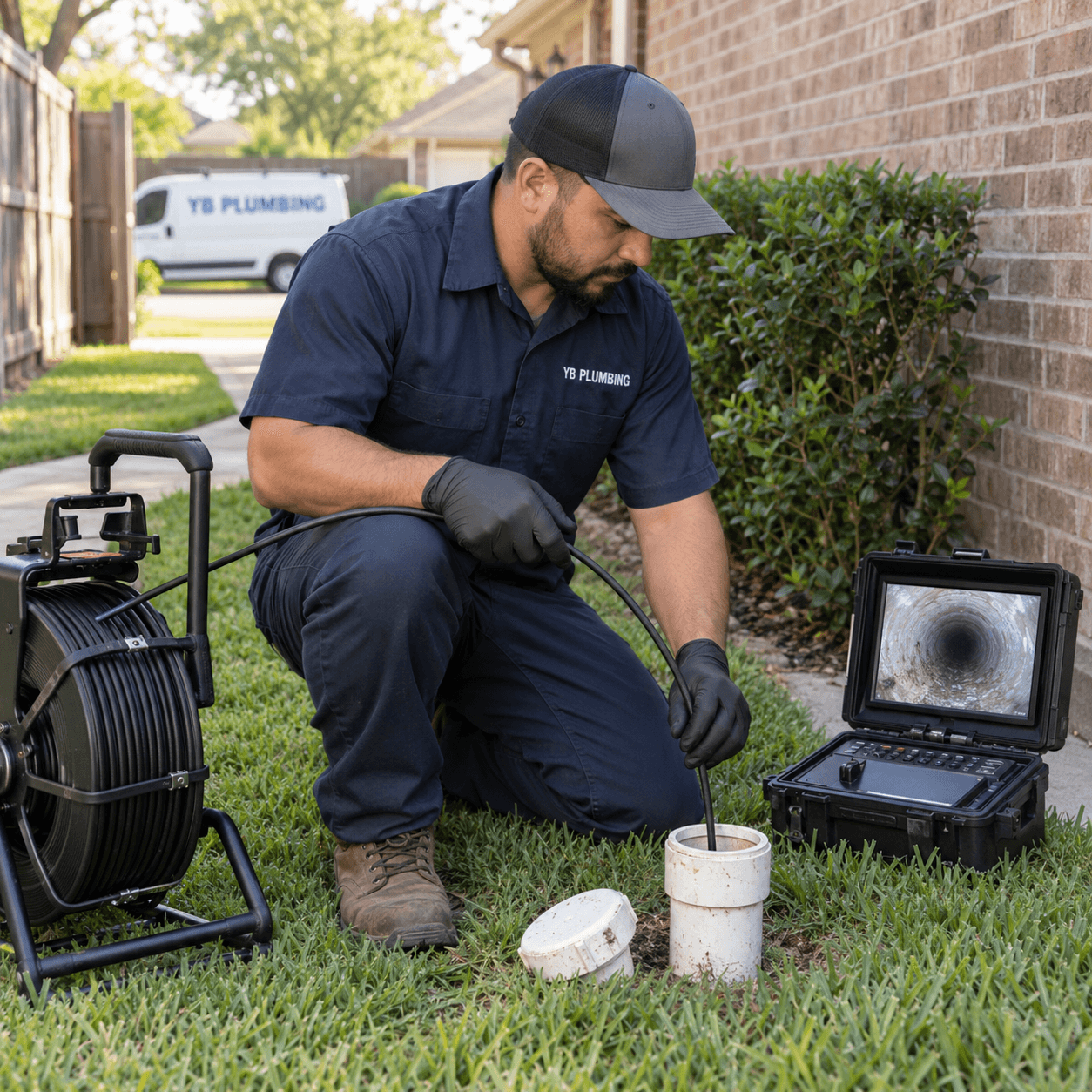
Know what to expect from your plumbing visit. We explain the recommended work, discuss the estimate, and keep you informed as the job progresses.
Know what your estimate includes.
Insured plumbing services for homes and businesses.
We tidy the work area before leaving.
Ask about the earliest available appointment.
Driveways, landscaping, walkways, and finished areas can make sewer access disruptive. When the pipe and site are suitable, a trenchless approach may reduce the amount of surface that must be opened while still addressing the structural problem.
Read about customers’ experiences with YB Plumbing, from arranging a visit to having their plumbing work completed.
The pipe and property have to qualify before a trenchless method is selected.
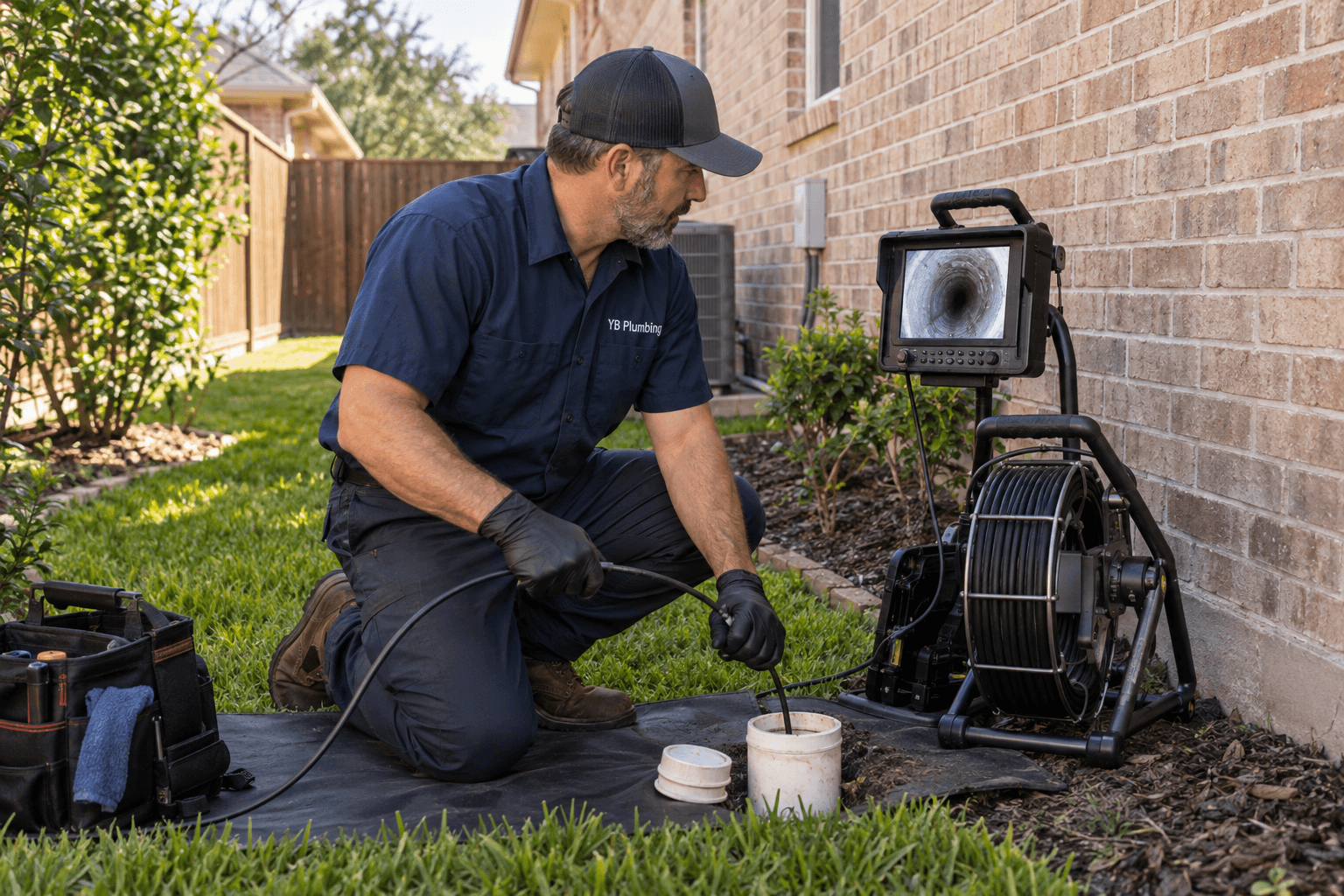
Camera inspection and cleaning are used as needed to understand the location and type of pipe failure.
We evaluate cleanouts, endpoints, pipe route, bends, collapse, and site conditions that affect trenchless feasibility.
If conditions are suitable, the trenchless repair approach is defined; otherwise, a conventional repair is recommended.
After repair, the sewer is checked to confirm a continuous drainage path through the corrected section.
Get help for plumbing repairs, drain cleaning, and hydro jetting in Houston. Contact our licensed team today for a clear estimate.
Questions about when trenchless repair is possible and when excavation is still needed.
No. Severe collapse, poor alignment, difficult connections, or other site conditions can make conventional excavation the better option.
Not necessarily. Access pits or localized excavation may still be required depending on the repair method and pipe layout.
Yes. The condition and geometry of the line need to be understood before choosing a repair method.
It may be useful in areas where reducing open excavation is valuable, but suitability still depends on the pipe and access conditions.
We explain the reason and provide a conventional repair or replacement scope that fits the actual condition of the sewer.