
If the kitchen sink gurgles, drains slowly, or begins filling with dirty water when the dishwasher empties, the dishwasher itself may not be the real problem. In many kitchens, the dishwasher discharge connects into the same drain system used by the sink. When that shared drain is partially restricted, the sudden discharge from the dishwasher can push water back toward the sink.
The pattern is important. A sink that works normally most of the day but reacts only when the dishwasher drains often points to a restriction somewhere after the dishwasher connection.
Why the Dishwasher Can Make the Sink Back Up
A dishwasher pumps wastewater out quickly. That discharge enters the kitchen drain through a hose connected to the sink drain assembly or garbage disposal, depending on the plumbing setup.
If the pipe downstream is partially blocked, the water cannot leave as fast as the dishwasher is sending it. The excess water may rise into the sink, create gurgling sounds, or make the sink drain more slowly until the surge passes.
A Partial Kitchen Drain Clog Is a Common Cause
Kitchen drain lines often collect grease, soap residue, food particles, and other debris over time. A partial restriction can still allow ordinary sink use, which is why the problem may not appear until the dishwasher releases a larger volume of water all at once.
The drain may seem “mostly fine” during light use but struggle under the higher flow from the dishwasher.
Grease Buildup Can Narrow the Pipe
Cooking oils and fats may enter the drain as liquid and then cool farther down the line. Over time, they can coat the pipe wall and catch food particles and soap residue.
This buildup reduces the open space inside the pipe. The dishwasher discharge can expose that restriction before the sink becomes completely blocked.
Why the Garbage Disposal Can Be Involved
If the dishwasher hose connects to a garbage disposal, the discharge passes through the disposal before entering the drain piping. Food debris, grease, or a restriction at the disposal outlet can slow the flow.
A disposal that spins normally can still be connected to a drain line that is partially clogged. The electrical operation of the disposal does not confirm that the downstream piping is clear.
Check Whether the Problem Happens With Both Sink Basins
In a double-bowl sink, watch whether water rises in one bowl when the dishwasher drains into the other side. If both bowls react, the restriction is probably after the two sink branches join together.
If only one side is affected, the problem may be closer to that specific trap or connection.
Why Gurgling Matters
Gurgling usually means air is being displaced through the drain system as water moves past a restriction. It does not always mean the line is fully blocked, but it can be an early sign that the drain is no longer moving water normally.
A kitchen sink that begins gurgling during dishwasher discharge should be checked before the restriction becomes severe enough to cause a complete backup.
Could the Dishwasher Drain Hose Be the Problem?
Yes, but hose problems usually create different symptoms. A kinked or poorly routed dishwasher hose can slow the appliance discharge, while a loose connection can leak under the sink.
If dirty water is actually rising into the sink basin, however, the shared drain line is often more important to inspect than the hose alone.
Why the High Loop or Air Gap Matters
The dishwasher discharge hose should be routed correctly to reduce the chance of sink water flowing backward toward the dishwasher. Depending on the installation, this may involve a high loop or an air-gap fitting.
That setup helps protect the appliance, but it does not solve a clogged kitchen drain. If the shared drain line is restricted, the sink can still back up even when the dishwasher hose is routed correctly.
What If the Sink Backs Up Without the Dishwasher?
If the sink is already slow during normal use, the dishwasher is simply making an existing drain problem more obvious. In that case, the kitchen branch likely needs cleaning rather than a dishwasher repair.
For related service information, see our Kitchen Drain Cleaning page.
When the Problem May Be Deeper Than the Kitchen
If the dishwasher discharge also causes a nearby floor drain to gurgle, another sink to drain slowly, or a toilet to react, the restriction may be farther downstream in a shared branch or main drain.
Several fixtures reacting together is a sign that the problem may not be limited to the kitchen trap.
Why Chemical Drain Cleaner Is Not the Best First Step
Chemical products may not remove grease, food debris, or a deeper branch-line restriction completely. They can also remain inside the pipe and create a hazard if the drain later needs mechanical cleaning.
A recurring kitchen backup is better handled by locating the restriction and cleaning the line directly.
How a Plumber Diagnoses the Problem
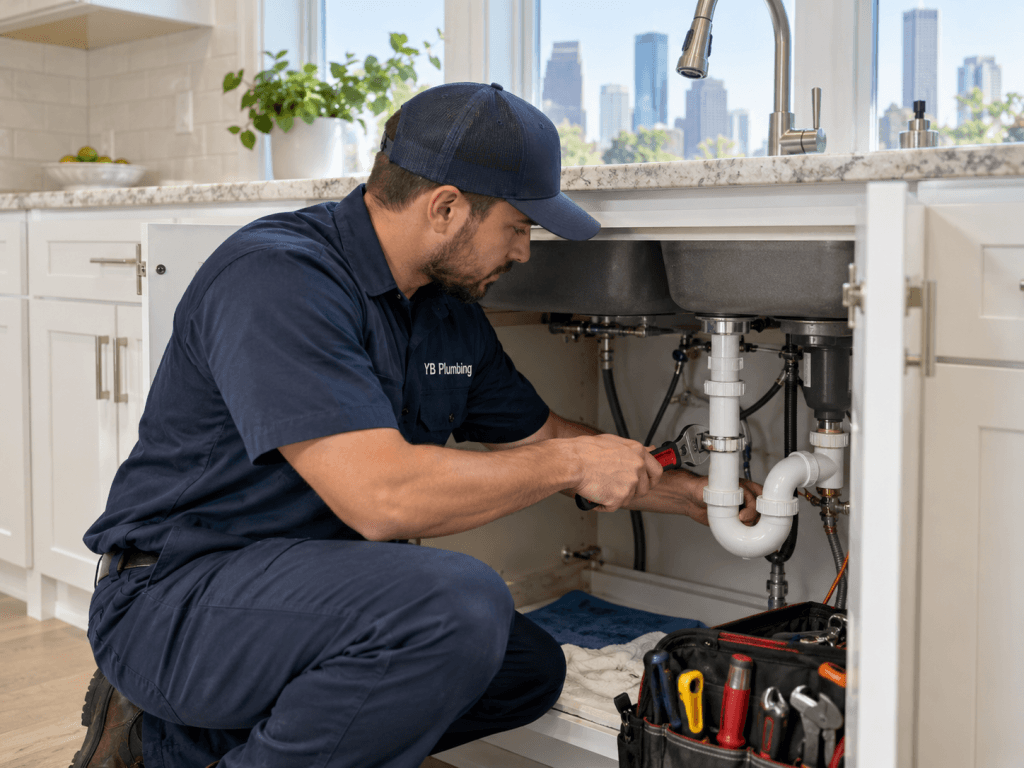
A plumber can check the sink trap, disposal connection, dishwasher discharge point, and the branch drain serving the kitchen. The goal is to determine whether the restriction is local or farther downstream.
If the problem has returned multiple times, additional inspection may be useful to understand whether heavy buildup or another condition is causing the repeated blockage.
When Hydro Jetting May Be Considered
For heavier grease and soft buildup in a suitable drain line, hydro jetting may be considered after the condition and access to the pipe are evaluated. The process can remove material from the pipe wall instead of only opening a narrow path through it.
See our Hydro Jetting services for more information.
What to Do Until the Drain Is Checked
Avoid running the dishwasher repeatedly if each drain cycle makes the sink rise. Limit heavy kitchen water use and do not add more grease or food debris to the drain.
If the sink begins overflowing or other fixtures start reacting, stop unnecessary water use until the blockage is cleared.
Get the Shared Kitchen Drain Checked
A dishwasher that triggers a kitchen sink backup is often exposing a restriction in the shared drain system. Finding and clearing that restriction can prevent the problem from becoming a full kitchen overflow.
YB Plumbing & Hydro Jetting Services Houston provides kitchen drain cleaning and residential plumbing service throughout Houston & Surrounding Areas. Contact us if your kitchen sink backs up, gurgles, or fills when the dishwasher drains.