

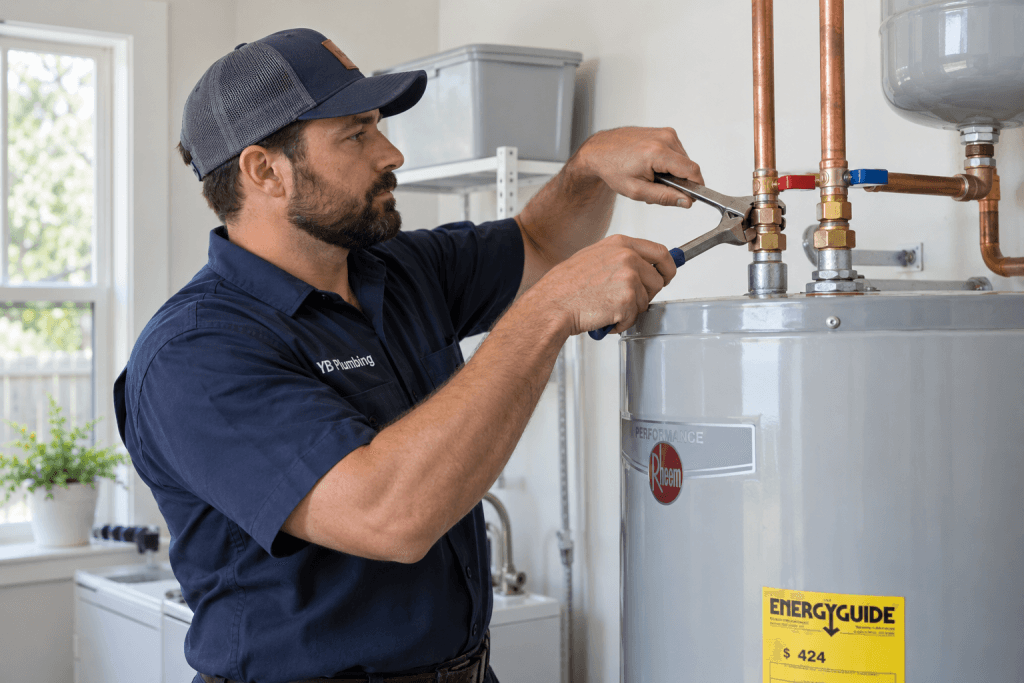
If you turn on a shower or faucet and wait a long time before hot water arrives, the delay does not always mean the water heater is failing. In many homes, the biggest factor is simply how far the fixture is from the heater and how much cooled water is sitting inside the hot-water piping between the two points.
The water already inside that pipe has to move out before freshly heated water reaches the fixture. The longer and larger the pipe run, the more water must be displaced and the longer the wait can feel.
Why Hot Water Does Not Arrive Instantly
When a hot-water faucet is closed, water remains inside the pipe. Over time, that water cools toward room temperature. The next time the fixture is opened, the cooled water comes out first, followed by progressively warmer water from the heater.
This is normal plumbing behavior, but excessive delays can be caused by long pipe runs, oversized piping, low flow, restrictions, or problems with the hot-water system.
Distance From the Water Heater Matters
A bathroom located close to the water heater may receive hot water quickly, while a bathroom on the opposite side of the home can take much longer. The farther the fixture is from the heater, the more water sits between the two locations.
Two fixtures in the same house can therefore have very different wait times even though they use the same water heater.
Pipe Diameter Changes the Amount of Water You Must Clear
A larger hot-water pipe holds more water per foot than a smaller pipe. If a long run is larger than necessary for the fixture demand, more cooled water may need to leave the line before hot water arrives.
Pipe sizing has to balance flow requirements with delivery time, so the right solution is not simply to make every hot-water pipe smaller.
Low-Flow Fixtures Can Make the Wait Feel Longer
Modern faucets and showerheads often use less water than older fixtures. Lower flow saves water during use, but it can also take longer to move the cooled water out of a long hot-water line.
A fixture may therefore take longer to feel hot even though the heater is producing hot water normally.
Why the First Use of the Morning Often Takes the Longest
After the plumbing sits unused overnight, the water inside the hot-water lines has had plenty of time to cool. The first shower or faucet use of the day must clear that cooled water from the piping.
Later uses may feel faster if the pipe is still warm and hot water was recently drawn through the same branch.
Can a Water Heater Problem Cause Delayed Hot Water?
Yes, especially when the delay is new or when the water never becomes fully hot. A water heater issue may reduce temperature, create inconsistent output, or slow recovery in a tank-style system.
If hot water eventually arrives at a normal temperature but only takes a long time at distant fixtures, the piping layout may be more important than the heater itself.
For related service information, visit our Water Heater Repair page.
What If the Water Starts Hot and Then Turns Cold?
That is a different symptom from delayed delivery. Hot water that arrives normally and then quickly becomes cold can point to limited heater capacity, a control problem, a mixing issue, or another problem with the water-heating system.
Knowing whether the complaint is “hot water takes too long to arrive” or “hot water does not stay hot” helps narrow the diagnosis.
Tankless Water Heaters Still Have Travel Time
A tankless water heater heats water as it flows through the unit, but the hot water still has to travel through the piping to the fixture. Installing a tankless unit does not automatically eliminate the delay at a distant bathroom.
The delivery time still depends on pipe length, pipe volume, fixture flow, and whether a recirculation system is present.
See our Tankless Water Heater Replacement page for related information.
What a Hot-Water Recirculation System Does
A recirculation system is designed to reduce the amount of cooled water waiting in the hot-water line. Depending on the plumbing design, it can move hot water through a return path or use a controlled crossover arrangement so hot water is available closer to the fixtures.
Recirculation systems can be controlled by timers, temperature settings, buttons, sensors, or other methods. The proper setup depends on the home’s piping and water-heater type.
Why a Recirculation Pump May Stop Helping
If a home already has recirculation but the wait time has become longer, the pump may not be operating, a check valve may be stuck, a timer may be off, or the control settings may have changed.
A failed recirculation system can make a home suddenly feel as though the water heater has become slower even though the heater itself is still working.
Could a Valve or Restriction Slow Hot-Water Delivery?
Yes. A partially closed valve, restrictive connector, clogged aerator, shower cartridge, or buildup in part of the hot-water path can reduce flow. Lower flow means the cooled water inside the line leaves more slowly.
If only one fixture has a long delay while nearby fixtures receive hot water normally, the problem may be local to that fixture rather than the main hot-water system.
Compare Several Fixtures Before Assuming the Heater Is Bad
A useful test is to compare how long hot water takes to reach fixtures at different locations. If every fixture is slow, the heater or main hot-water system deserves more attention. If only the farthest bathroom is slow, pipe distance and layout may explain much of the delay.
If one faucet is slow while another fixture in the same room gets hot quickly, look for a local restriction or valve issue.
Why Pipe Insulation Can Help
Insulation around hot-water piping can slow heat loss after hot water has moved through the line. It does not eliminate the initial volume of cooled water after a long period of nonuse, but it can help the pipe stay warmer between repeated uses.
The benefit is usually more noticeable on accessible hot-water piping and in areas where the surrounding temperature causes rapid heat loss.
When the Delay Deserves a Plumbing Check
A long wait is worth investigating when it has recently become worse, when one fixture behaves very differently from nearby fixtures, when hot-water pressure has dropped, or when an existing recirculation system no longer seems to work.
The goal is to determine whether the delay is normal travel time or the result of a heater, valve, circulation, or piping problem.
Find Out Where the Hot-Water Delay Is Coming From
YB Plumbing & Hydro Jetting Services Houston provides water-heater repair and residential plumbing diagnostics throughout Houston & Surrounding Areas. Contact us if hot water takes unusually long to reach a faucet or shower and you want the cause identified.