

When one sink drains slowly, the problem may be limited to that fixture. When a toilet, bathtub, shower, and floor drain start reacting at the same time, the issue is usually farther downstream. In many Houston homes, several fixtures backing up together can point to a restriction in the main drain or sewer line.
The pattern matters. A single clogged sink and a whole-house drainage problem do not behave the same way. Knowing the difference can help you stop using the right fixtures, avoid a larger overflow, and explain the symptoms clearly when you schedule service.
What It Means When Several Drains Back Up Together
Every plumbing fixture connects to a branch drain, and those branches eventually feed into a larger building drain and sewer line. If a blockage develops after several branch lines have already joined together, wastewater from multiple fixtures can no longer move out normally.
That is why the lowest fixtures often show the problem first. A downstairs shower, tub, or floor drain may begin holding water while a toilet gurgles nearby. If more water is used elsewhere in the home, the backup can rise higher.
Signs the Problem May Be in the Main Drain Line
Several symptoms occurring together are more useful than one slow drain by itself.
- More than one fixture drains slowly at the same time.
- A toilet gurgles when a sink, washer, or shower drains.
- Water rises in a tub or shower when a toilet is flushed.
- The lowest floor drain begins to overflow.
- The same backup returns soon after a basic drain cleaning.
- Sewer odors appear near multiple fixtures instead of only one drain.
If these symptoms appear together, continuing to run water can make the backup worse. Avoid unnecessary flushing, laundry cycles, dishwashing, and long showers until the line is evaluated.
Common Causes of Whole-House Drain Backups
A main-line restriction can develop for several reasons. The right repair depends on what is actually inside the pipe and whether the pipe itself is damaged.
Heavy Grease and Debris Buildup
Grease, soap residue, food waste, sludge, and other material can collect along the inner wall of a drain line. Over time, the opening becomes smaller and wastewater moves more slowly. A partial restriction may work normally during light use but back up when several fixtures discharge at once.
Wipes and Non-Flushable Materials
Products labeled as disposable do not always break apart quickly inside a sewer line. Wipes, paper towels, hygiene products, and other materials can catch on rough pipe surfaces or existing buildup and create a larger obstruction.
Root Intrusion
Roots can enter through cracks, separated joints, or other openings in an underground sewer line. Once inside, they can trap paper and debris. Root intrusion is only one possible cause, which is why a camera inspection is useful before assuming trees are responsible.
Damaged or Shifted Sewer Pipe
A pipe that is cracked, offset, collapsed, corroded, or holding standing water because of poor slope can create recurring drainage problems. In these cases, cleaning may improve flow temporarily without correcting the structural defect.
Why the Lowest Fixture Often Backs Up First
Wastewater follows gravity. When the main line is restricted, water searches for the lowest available opening in the plumbing system. That is often a first-floor tub, shower, or floor drain.
This is also why a backup may seem to move from one fixture to another. The fixture where water appears is not always the source of the problem. It may simply be the lowest place where backed-up wastewater can escape.
What a Plumber Checks First
The first step is usually to understand the pattern of the backup. Which fixtures are affected? Which one reacts first? Does the problem happen only during heavy water use? Has the line been cleaned before?
After that, the plumber may access the system through an exterior or interior cleanout. The next step depends on the condition of the line and the type of blockage.
Drain Cleaning
If the problem appears to be a removable obstruction, the line may be cleared with mechanical drain-cleaning equipment. The goal is to reopen the path so wastewater can move through the pipe again.
For related service information, see our Residential Drain Cleaning page.
Hydro Jetting
When heavy buildup coats the pipe wall, hydro jetting may be appropriate if the pipe is in suitable condition. High-pressure water can remove grease, sludge, scale, and other material that a simple cable may only punch through.
Learn more about our Hydro Jetting service.
Sewer Camera Inspection
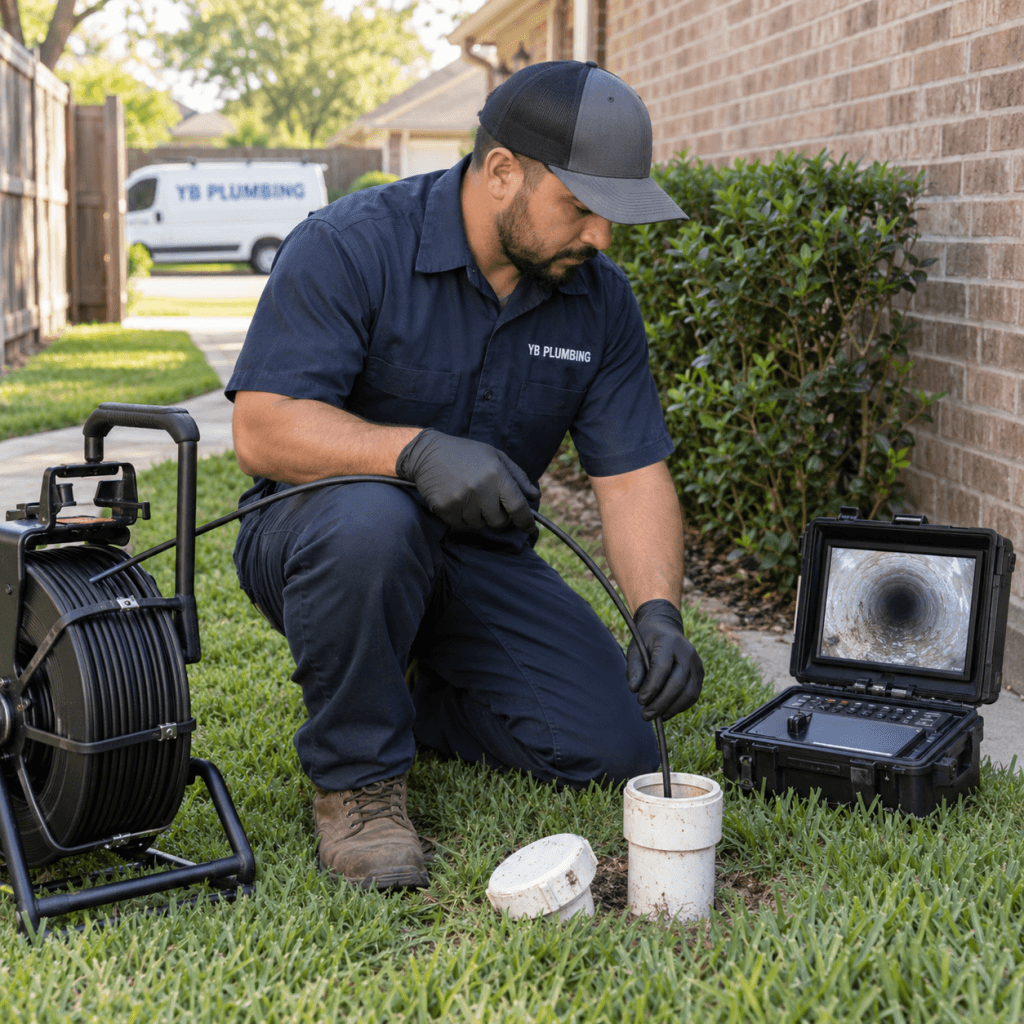
A camera inspection can help determine why the same backup keeps returning. It may reveal root intrusion, separated joints, cracks, offsets, heavy buildup, standing water, or a damaged section of pipe.
See our Sewer Camera Inspection service for more information.
When Cleaning Is Not Enough
If the camera shows a broken or badly displaced sewer line, repeated cleaning will not correct the underlying defect. The line may continue collecting debris or allowing roots and soil to enter.
In that situation, the next step is to determine whether the damaged section can be repaired locally or whether a longer section requires replacement. The repair method depends on pipe material, depth, access, location, and the extent of the damage.
For structural sewer problems, visit our Sewer Line Repair page.
What to Do Before the Plumber Arrives
If several fixtures are backing up at once, reducing water use can help prevent additional overflow.
- Do not run the washing machine or dishwasher.
- Avoid flushing toilets unless absolutely necessary.
- Stop using showers and tubs that are already draining slowly.
- Keep people away from any area where sewage has overflowed.
- Do not pour chemical drain cleaner into multiple fixtures.
If wastewater is already coming out of a floor drain, tub, or shower, treat the situation as an active sewer backup and limit water use until the line is cleared or repaired.
Get the Cause Identified Before the Next Backup
A one-time clog and a recurring main-line problem require different solutions. When several drains back up together, the most useful next step is to determine where the restriction is and whether the pipe is still structurally sound.
YB Plumbing & Hydro Jetting Services Houston provides drain cleaning, hydro jetting, sewer camera inspections, and sewer repair throughout Houston & Surrounding Areas. Contact us when multiple drains are backing up or the same main-line problem keeps returning.