

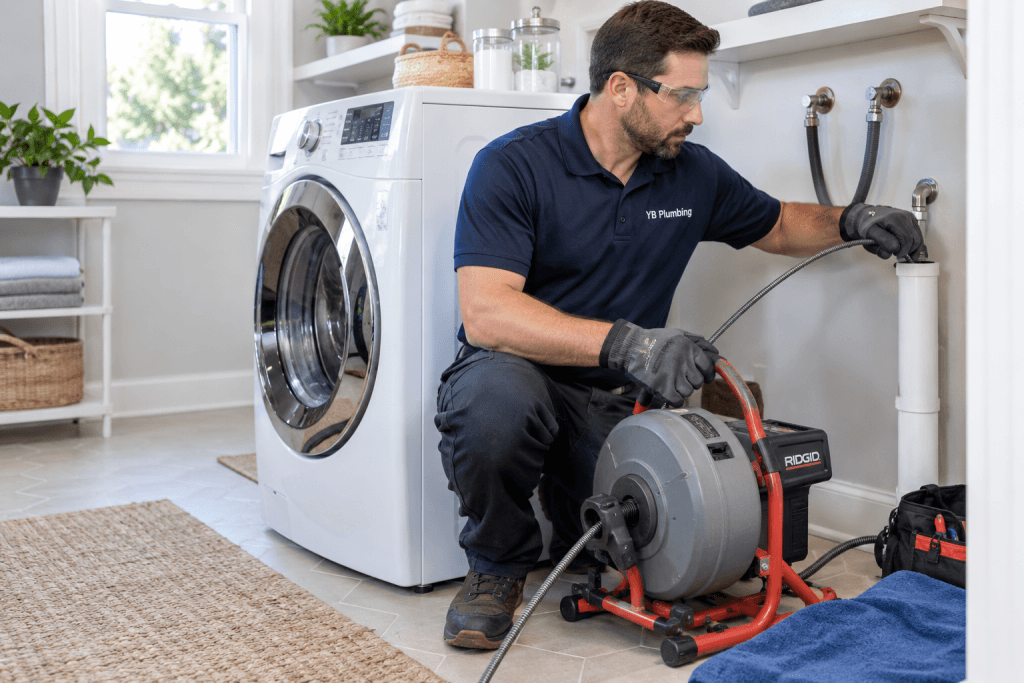
A washing machine can drain a large amount of water in a short time. If the laundry standpipe or branch drain cannot carry that flow away fast enough, water may rise to the top of the standpipe and spill onto the floor. In some Houston homes, the overflow happens only during the drain or spin cycle, which is a strong clue that the problem is in the laundry drain rather than the washing machine itself.
An overflowing washer drain should not be ignored. Even a small amount of repeated water can damage baseboards, flooring, drywall, and nearby cabinets. The goal is to find out whether the problem is a local laundry clog or part of a larger drainage issue.
Why the Overflow Happens During the Drain Cycle
While the washer is filling, water moves into the machine slowly through the supply hoses. During the drain cycle, the pump sends that water out much faster through the discharge hose. The standpipe and drain line must be able to accept that sudden flow.
If the pipe is partially restricted, the water cannot move away quickly enough. It rises in the standpipe instead. Once the water level reaches the top, it spills onto the floor.
Common Causes of a Washing Machine Drain Overflow
Lint and Fabric Debris
Lint, fibers, pet hair, and small debris can collect inside the laundry drain over time. These materials may combine with soap residue and form a soft restriction along the pipe wall. The drain can appear normal during light use but overflow when the washing machine pumps out a full load.
Soap and Detergent Buildup
Too much detergent, heavy use of fabric products, and residue from repeated wash cycles can contribute to buildup inside the line. The restriction may develop slowly, so the first sign is often a washer that used to drain normally but now causes the standpipe to fill higher than before.
A Deeper Branch-Line Clog
The standpipe itself may be clear while the branch drain farther downstream is restricted. In that case, water can travel several feet before hitting the blockage and then push back toward the laundry connection.
If nearby sinks, floor drains, or other fixtures also drain slowly, the problem may extend beyond the laundry standpipe.
A Drain Line That Cannot Keep Up With the Discharge
Older laundry plumbing may have a narrow, poorly routed, or heavily scaled drain line. A modern washer can expose a weakness that was not obvious with an older machine. The line may not be completely blocked; it simply cannot move the discharge fast enough.
Standpipe or Hose Problems
The discharge hose should send water into the standpipe without being sealed airtight or pushed too far into the drain. A damaged, loose, or poorly positioned hose can also cause splashing or water outside the pipe. That is different from a true backup, where water rises from inside the standpipe.
How to Tell Whether the Drain Is Actually Backing Up
Watch the standpipe during a drain cycle if it is safe to do so. If water rises from inside the pipe before spilling over, the drain is not keeping up with the washer discharge.
Other signs include:
- The overflow happens during the spin or drain cycle.
- You hear gurgling from the laundry drain.
- The standpipe fills almost to the top before slowly dropping.
- Nearby fixtures drain more slowly than usual.
- The problem returns after several successful wash loads.
- There is a sewer or musty odor near the laundry area.
If water is leaking from the hose connection instead of rising from the standpipe, the washing machine discharge setup may need attention rather than drain cleaning.
Why Chemical Drain Cleaners Are a Poor First Step
Pouring chemical drain cleaner into a laundry standpipe may not reach or remove the actual restriction. If the blockage is made of lint, fibers, hardened residue, or debris farther down the branch line, the chemical may sit in the pipe without restoring full flow.
It can also create a hazard for anyone who later opens or mechanically cleans the drain. For a recurring laundry backup, physical inspection and proper drain cleaning are a better way to identify the cause.
What a Plumber Checks on a Laundry Drain
The first step is to confirm where the backup begins. A plumber may inspect the standpipe, trap, accessible fittings, and nearby fixtures before choosing the cleaning method.
The line can then be cleaned through an appropriate access point. The goal is not only to create a small opening, but to restore enough internal space for the washing machine discharge to move through without rising out of the standpipe.
For related service information, see our Laundry Drain Cleaning page.
When the Problem Is Bigger Than the Laundry Line
If the washer overflow occurs together with slow sinks, gurgling toilets, or water appearing at a floor drain, the restriction may be farther downstream. In that situation, cleaning only the laundry standpipe may not solve the whole problem.
A deeper branch or main-line issue may require additional drain cleaning or a camera inspection, depending on the symptoms and access to the piping.
If a floor drain is also affected, our Floor Drain Cleaning service may be relevant to the same drainage problem.
How to Reduce Future Laundry Drain Problems
Routine habits can help reduce the amount of debris entering the laundry drain.
- Use the amount of detergent recommended for the washer and product.
- Check pockets before washing clothes.
- Clean the washer lint filter if the appliance has one.
- Watch for slower standpipe drainage before a full overflow develops.
- Do not ignore repeated gurgling or water rising in the standpipe.
- Have recurring backups evaluated instead of repeatedly using temporary drain products.
What to Do If the Washer Is Overflowing Now
Stop the washing machine before the next drain cycle if possible and avoid running another load until the drain is checked. Clean up standing water quickly to limit damage to flooring and walls.
YB Plumbing & Hydro Jetting Services Houston provides laundry drain cleaning and residential drain service throughout Houston & Surrounding Areas. Contact us when the washing machine standpipe overflows, drains slowly, or keeps backing up during the wash cycle.