

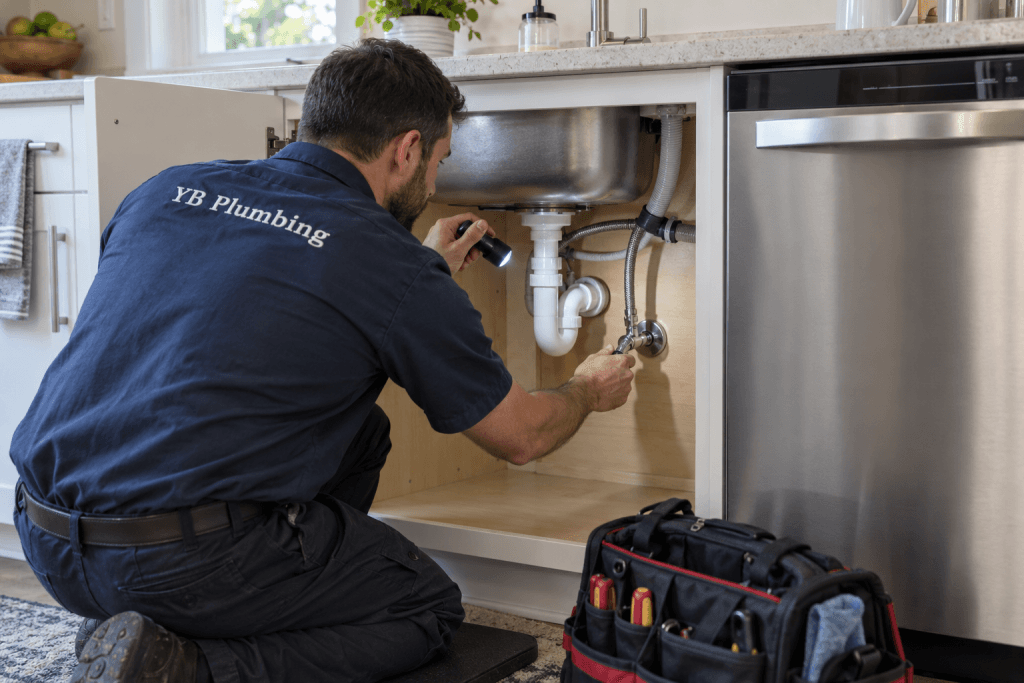
The small shutoff valves under a sink are easy to ignore until you actually need them. If a faucet starts leaking or needs replacement, those valves should let you stop the water without shutting down the entire house. But older valves can become stiff, stuck, corroded, or begin dripping as soon as they are turned.
A valve that has not moved in years may look fine from the outside while the internal seals, stem, or connection have deteriorated. Forcing it can turn a simple faucet repair into a larger water leak.
Why Sink Shutoff Valves Get Stuck
Most sink shutoff valves spend nearly all of their life in one position. Mineral deposits, corrosion, aging seals, and lack of movement can make the stem harder to turn over time.
In some cases, the handle moves only slightly. In others, the handle turns but the valve does not actually stop the water.
Why a Valve Can Start Leaking After You Touch It
An older valve may remain dry while it is left alone. Once the stem is moved, a worn packing seal around the stem can begin leaking.
This is why a valve can appear normal for years and then start dripping during a faucet replacement or plumbing repair. The movement did not necessarily create the wear; it simply exposed a seal that was already deteriorated.
Where the Leak Usually Appears
Water may appear around the valve stem behind the handle, at the compression connection to the water pipe, or at the supply-line connection leading to the faucet.
Identifying the exact leak point matters because tightening the wrong connection can make the problem worse or damage the valve.
Do Not Force a Valve That Will Not Turn
If the handle feels frozen, applying excessive force can break the stem, damage the handle, or disturb the connection to the water pipe.
When a valve is badly corroded or seized, replacement is often safer than trying to make an old valve work again.
What If the Valve Turns but Does Not Shut Off the Water?
A shutoff valve can fail internally even when the handle still moves. The internal washer or sealing mechanism may be worn, damaged, or unable to close against buildup.
If water continues flowing to the faucet after the valve is fully turned off, the valve is no longer providing reliable isolation.
Why Reliable Shutoff Valves Matter Before Faucet Work
Faucet replacement, supply-line replacement, and many sink repairs are easier and safer when the hot and cold valves under the sink work correctly.
If the valves cannot stop the water, the main house supply may need to be shut off before the work begins. Replacing failed fixture valves at the same time can restore local control for future service.
Angle Stops and Straight Stops
The shutoff valve under a sink may be an angle stop or a straight stop depending on how the water line approaches the fixture. An angle stop changes the direction of flow, while a straight stop continues in the same general direction.
The correct replacement depends on the piping material, connection type, available space, and existing plumbing layout.
Compression, Threaded, Soldered, and Push Connections
Fixture shutoff valves can connect to the water line in several ways. Common methods include compression fittings, threaded connections, soldered copper connections, and approved push-type fittings.
Knowing the connection type matters because the removal and replacement method is different for each one.
Why Corrosion Around the Valve Should Be Checked
Green, white, or rust-colored buildup around a valve can indicate long-term moisture, mineral deposits, or corrosion.
Surface buildup does not always mean the valve is actively leaking, but heavy corrosion around the pipe or fitting deserves attention before the valve is disturbed.
Could the Supply Line Be the Real Problem?
Yes. Flexible faucet supply lines can also age, corrode, kink, or leak at their threaded connections. A leak under the sink should be traced carefully before assuming the shutoff valve itself has failed.
If both the valve and supply line are old, replacing them together may be appropriate during faucet service.
Why Multi-Turn Valves Can Become Difficult to Operate
Traditional multi-turn valves use a stem and internal sealing parts that can wear or collect mineral deposits. After years without movement, the valve may become difficult to close completely.
Quarter-turn valves use a different internal design and are often easier to operate, but the correct replacement still depends on the existing piping and installation conditions.
What to Do If the Valve Starts Dripping
If a valve begins leaking after it is moved, place a container or towel beneath it and avoid repeatedly opening and closing it. If the leak increases or the valve cannot control the water, the main water supply may need to be shut off until the valve is repaired or replaced.
Do not rely on a leaking fixture valve during a repair that requires dependable water isolation.
Can the Existing Valve Be Repaired?
Some valves can be serviced, but many small fixture shutoffs are replaced when they are badly corroded, seized, or no longer sealing correctly.
Replacement can provide a more reliable shutoff and reduce the chance of another leak during future faucet or supply-line work.
When the Pipe Behind the Valve Also Needs Attention
If the pipe is corroded, damaged, too short, or poorly supported, installing a new valve alone may not be enough. The connection point has to be solid so the new valve can seal correctly.
This is especially important when an old valve has been leaking for a long time and the surrounding connection shows visible deterioration.
How a Plumber Tests the New Valve
After replacement, the valve should be opened, closed, and checked under normal water pressure. The connection to the pipe, the valve stem, and the faucet supply connection should all remain dry.
The faucet is then operated to confirm normal flow and proper shutoff.
Replace a Failing Sink Shutoff Before You Need It in an Emergency
A stuck or leaking shutoff valve is easiest to address before a faucet failure or active leak makes the valve urgently necessary.
YB Plumbing & Hydro Jetting Services Houston provides fixture shutoff valve replacement and residential plumbing service throughout Houston & Surrounding Areas. Contact us if a sink valve will not turn, will not stop the water, or begins leaking when it is operated.