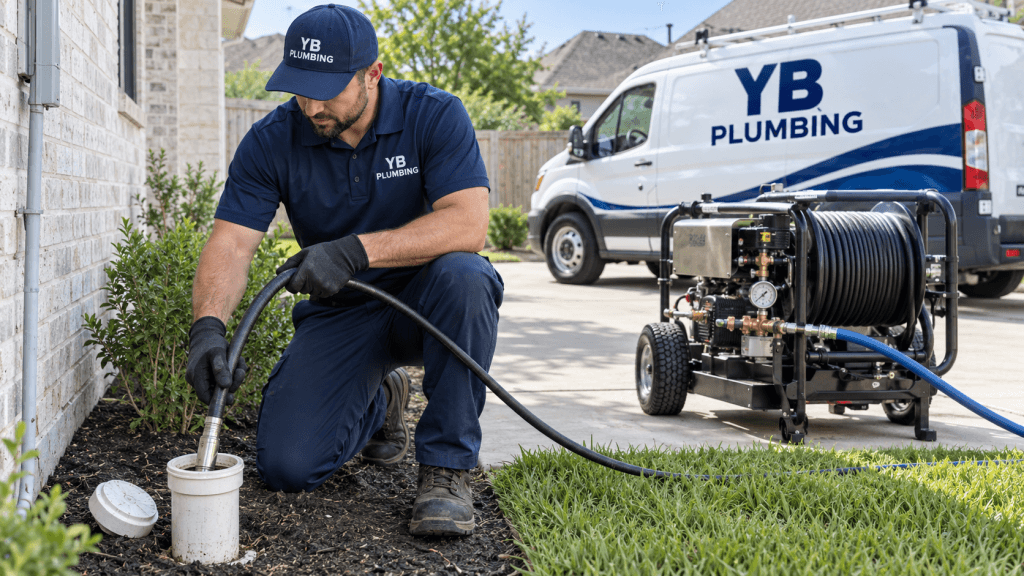
Hydro jetting is designed for drain and sewer lines that have more than a single loose obstruction. Instead of simply opening a small path through the blockage, the process uses a controlled stream of high-pressure water to wash buildup away from the inside of the pipe and move loosened material toward an approved discharge point.
The most important question is not whether hydro jetting is “stronger” than another drain-cleaning method. It is whether the pipe is in suitable condition and whether the material inside the line can actually be removed with water. A camera inspection and an understanding of the piping system help determine when jetting is the right approach.
Grease and Fat Buildup
Grease is one of the most common reasons hydro jetting is used in kitchen and commercial drain lines. Cooking fats may enter the drain as a liquid, then cool and stick to the pipe wall. Over time, food particles and other debris attach to that layer and reduce the open area inside the line.
Hydro jetting can wash soft and hardened grease deposits from the pipe wall when the piping is structurally suitable for the service. This is especially useful in restaurant grease lines and other drain systems that experience repeated buildup.
For related commercial service information, visit our Commercial Hydro Jetting page.
Sludge and Organic Residue
Drain lines can collect a mixture of soap residue, food waste, hair, biofilm, and other organic material. This buildup may not form one solid clog. Instead, it can coat the pipe gradually and make the line more likely to catch additional debris.
A properly selected jetting nozzle can help remove this soft material and carry it out of the line. The result is a cleaner pipe interior rather than a narrow opening through the center of the buildup.
Soap and Laundry Residue
Laundry and bathroom drain lines can develop residue from detergent, fabric products, soap, hair, lint, and body oils. In some systems, these materials combine into a thick film that slows drainage and creates repeated restrictions.
Hydro jetting may be useful when the affected line is large enough, accessible, and in condition to handle the cleaning process. Smaller fixture branches may require a different method, so the location and pipe size matter.
Loose Scale and Mineral Deposits
Older drain piping can develop rough internal surfaces from corrosion, mineral deposits, or scale. Some loose deposits can be broken up and flushed from the line with hydro jetting.
Hydro jetting does not rebuild pipe walls or reverse corrosion. If the pipe itself is badly deteriorated, cleaning will not correct the structural condition. That is why pipe condition should be evaluated before aggressive cleaning is performed.
Tree Roots at Sewer-Line Entry Points
Roots can enter a sewer line through cracks, separated joints, or other openings. Jetting equipment with the correct nozzle may remove smaller root growth and clear the flow path in certain sewer lines.
Removing the roots does not repair the opening that allowed them into the pipe. If a camera shows a broken joint, crack, offset, or other structural defect, the line may need repair after it is cleaned.
For root-related service information, see our Root Removal Hydro Jetting page.
Sand, Silt, and Loose Sediment
Storm drains, exterior lines, and some commercial systems can collect sand, mud, silt, or other loose sediment. Hydro jetting can move this material through the line when the system has an appropriate outlet and the material is not packed beyond what the pipe can safely handle.
Heavy sediment problems should be evaluated carefully because the source matters. A line that continually fills with dirt may have an open joint, damaged pipe, failed catch basin, or another condition that cleaning alone will not solve.
Food Debris and Soft Blockages
Kitchen and food-service drain lines can accumulate food particles along with grease and soap residue. When these materials build up together, the line may drain normally for a while and then back up during heavy use.
Hydro jetting can help remove the larger volume of soft debris from the pipe wall and move it downstream. This is one reason jetting is often considered for commercial kitchens with recurring drain restrictions.
What Hydro Jetting Does Not Fix
Hydro jetting is a cleaning process. It does not repair a broken sewer line, correct a collapsed pipe, reconnect a separated joint, or restore proper slope to a belly in the line.
If the pipe is damaged, cleaning may improve flow temporarily while the structural problem remains. A camera inspection helps distinguish between a dirty pipe and a damaged pipe.
- Collapsed pipe sections require repair or replacement.
- Separated joints may continue allowing roots or soil into the line.
- Severe corrosion can leave a pipe too fragile for aggressive cleaning.
- A belly or low spot can continue holding water after the line is cleaned.
- Foreign objects may require retrieval rather than water pressure.
Why a Camera Inspection Matters Before Jetting
Before hydro jetting, a camera can help identify the pipe material, visible damage, location of the obstruction, and the type of buildup inside the line. That information helps determine whether jetting is appropriate and which cleaning setup should be used.
It also helps avoid treating every recurring backup as a simple buildup problem. If the camera shows a structural failure, the service plan should address that condition instead of relying only on repeated cleaning.
Why We Camera the Line After Hydro Jetting
At YB Plumbing & Hydro Jetting Services Houston, we use a camera after hydro jetting to review the cleaned line. The post-cleaning inspection helps confirm what material was removed and whether the pipe shows cracks, offsets, corrosion, roots, or other conditions that were hidden by the buildup.
The second camera view is also useful for documenting the condition of the line after cleaning rather than assuming the pipe is clear based only on improved flow.
Residential Hydro Jetting
In residential systems, hydro jetting may be considered for recurring main-line backups, grease buildup, sludge, root intrusion, or other deposits that repeatedly restrict flow. The service should be matched to the pipe condition and the location of the problem.
See our Residential Hydro Jetting page for more information.
Commercial Hydro Jetting
Commercial drain systems often handle more grease, food waste, sediment, and daily flow than residential lines. Restaurants, retail properties, warehouses, and other businesses may need hydro jetting when buildup returns even after basic drain clearing.
Commercial systems can also include grease lines, floor drains, trench drains, catch basins, and larger sewer lines, so the equipment and access method must match the system being cleaned.
When Hydro Jetting May Be the Right Next Step
Hydro jetting is worth considering when a drain or sewer line has recurring buildup, repeated grease restrictions, root growth, sludge, or sediment that a basic clearing has not fully removed. The decision should still begin with the condition of the pipe and the location of the problem.
YB Plumbing & Hydro Jetting Services Houston provides residential and commercial hydro jetting throughout Houston & Surrounding Areas. Contact us when a drain or sewer line keeps backing up and needs more than a temporary opening.