

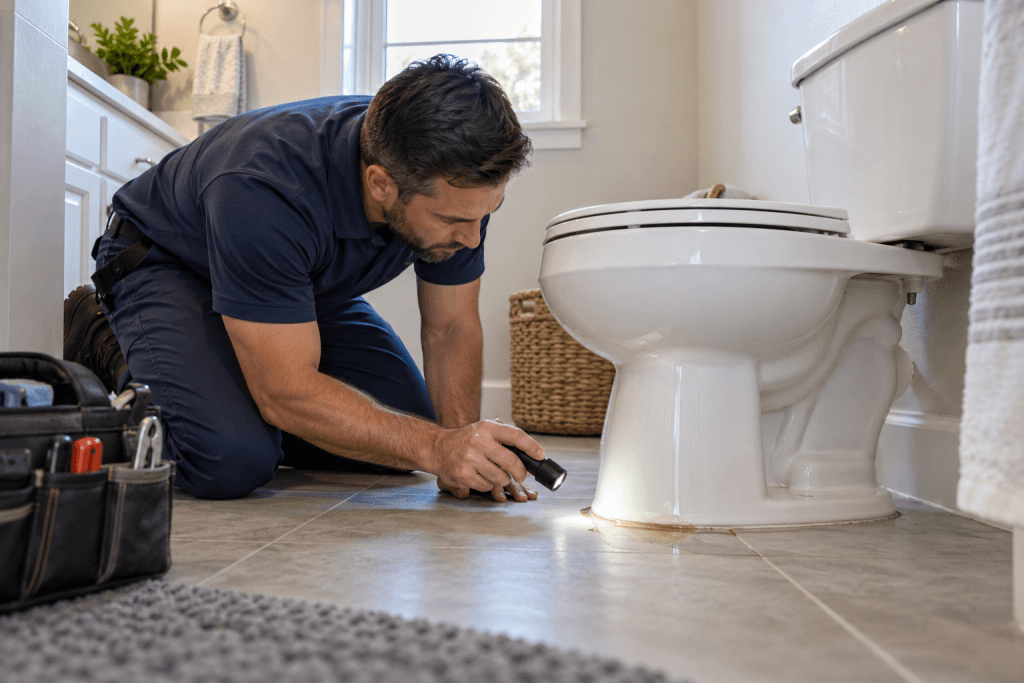
A toilet should feel solid when you sit on it. If the bowl rocks, shifts, or moves slightly from side to side, something at the base is not holding the fixture securely. The movement may come from loose mounting hardware, an uneven floor, a damaged flange, or a toilet that was not set correctly.
A rocking toilet is more than an annoyance. Repeated movement can stress the seal between the toilet and the drain opening. Over time, that can allow water to escape around the base or damage the flange that anchors the toilet to the floor.
Why a Toilet Should Not Move
The toilet is designed to sit firmly on the finished floor while bolts connect the bowl to the toilet flange below. The flange is attached to the drainage system and provides the mounting point for the fixture.
When the toilet is installed correctly, the base, flange, bolts, and seal work together to keep the bowl stable and the drain connection sealed.
Loose Toilet Bolts
One of the simplest causes of movement is loose mounting hardware. The bolts at the base can gradually loosen, especially if the toilet has been moving for some time.
Simply tightening them is not always the complete solution. If the toilet rocks because the floor is uneven or the flange is damaged, overtightening the bolts can crack the porcelain without fixing the underlying problem.
An Uneven Floor Can Make the Toilet Rock
Tile, stone, or other finished flooring may not be perfectly flat around the toilet base. If part of the toilet touches the floor while another area has a small gap, the bowl can pivot under weight.
Proper toilet shims can be used when the fixture needs minor leveling. The toilet still has to be secured correctly, and the drain seal must remain properly compressed.
A Damaged or Broken Toilet Flange
The flange under the toilet can crack, corrode, loosen from the floor, or break around the bolt slots. When that happens, the bolts may no longer hold the toilet firmly.
A damaged flange is especially important because tightening the toilet from above will not restore a broken mounting point below it.
For related service information, visit our Toilet Installation page.
What Happens to the Wax Ring When the Toilet Moves?
The seal between the toilet outlet and the flange is commonly made with a wax ring or another approved toilet seal. That seal is designed to stay compressed in a stable position.
Repeated rocking can disturb the seal. Once the seal is compromised, flushing may allow water to leak beneath the toilet even if the leak is not immediately visible.
Signs the Base Seal May Already Be Leaking
- Water appears around the toilet base after flushing.
- The flooring near the toilet feels soft or swollen.
- There is staining around the base or nearby grout.
- A sewer-like odor develops near the toilet.
- The toilet has become progressively looser.
- The ceiling below an upstairs bathroom shows moisture.
Any of these symptoms make it important to remove and inspect the toilet instead of only tightening the bolts.
Why Caulk Can Hide the Problem
Caulk around the toilet base can improve appearance and help keep cleaning water from getting underneath the fixture. It is not a structural repair for a toilet that moves.
If the toilet is rocking because of a broken flange or improper setting, adding more caulk does not correct the mounting problem.
Can a Loose Toilet Damage the Floor?
Yes. If water leaks beneath the fixture, wood subflooring can swell, soften, or deteriorate. Even without a major leak, repeated movement can damage grout, flooring edges, or the flange attachment.
The earlier the movement is corrected, the easier it is to avoid a larger repair around the toilet opening.
Why the Toilet May Have Started Rocking After New Flooring
Flooring work can change the height relationship between the finished floor and the toilet flange. If the flange ends up too low, too high, or poorly supported after the floor is changed, the toilet may not sit correctly.
A toilet that was stable before a remodel but rocks afterward should be checked for flange height, floor flatness, and proper reset.
What a Plumber Checks After Removing the Toilet
Once the toilet is lifted, the flange can be inspected directly. A plumber can check whether it is cracked, loose, corroded, improperly positioned, or no longer anchored securely.
The condition of the floor around the flange is also important. A new seal should not be installed over a damaged mounting surface without addressing the reason the toilet moved.
Can the Existing Toilet Be Reinstalled?
Often, yes. If the porcelain is not cracked and the toilet itself is in good condition, it can usually be reset after the flange and floor issues are corrected.
A new seal is normally used when the toilet is removed and reinstalled. Reusing a compressed wax ring is not a reliable way to reseal the connection.
When Replacement Makes More Sense
If the toilet is cracked, heavily worn, difficult to repair, or already scheduled for replacement, correcting the flange and installing a new fixture at the same time may be more practical.
The important part is that the new toilet must sit flat, remain stable, and seal correctly to the drainage system.
Do Not Keep Using a Toilet That Is Getting Looser
A slight movement may not cause an immediate visible leak, but continued rocking can make the flange or seal problem worse. If the toilet shifts under normal use, it should be inspected before water damage develops.
YB Plumbing & Hydro Jetting Services Houston provides toilet installation and toilet repair throughout Houston & Surrounding Areas. Contact us if your toilet rocks, moves, or leaks around the base.